
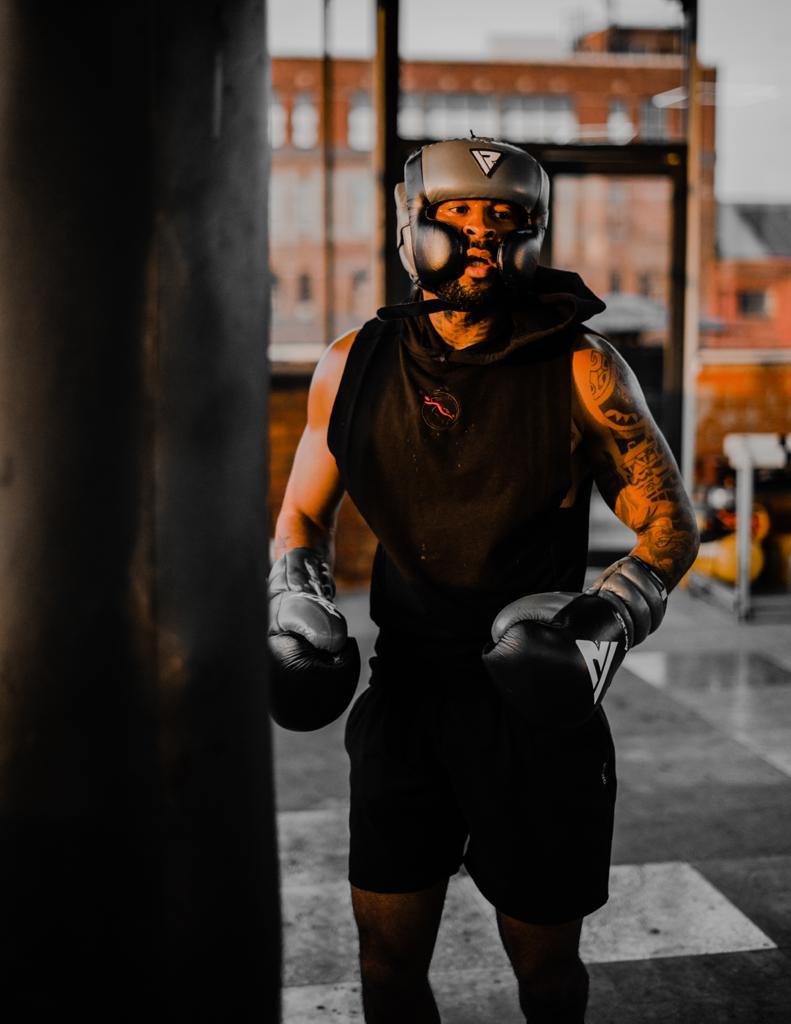
DEMANDS OF THE SPORT
Boxing combines brief, high-intensity exchanges with constant footwork, defensive movement and incomplete recovery. Effective preparation must develop the boxer’s ability to produce and transfer force quickly, repeat explosive actions and preserve technical quality as fatigue builds.
SPORT PERFORMANCE REQUIREMENTS.
We train the physical qualities beneath boxing skill: force from the floor, lower-body drive, hip and trunk rotation, scapular control and rapid upper-limb expression. Strength, power and conditioning are planned around the boxer’s technical work, sparring exposure, camp phase and weight class.
GENERATE + TRANSFER FORCE
Connect the legs, hips and trunk to deliver fast force through the shoulder and fist.
MOVE + REPOSITION
Accelerate over short distances, brake, pivot and change angles without losing balance or punching options.
REPEAT EXPLOSIVE OUTPUT
Produce combinations, defensive reactions and high-intensity exchanges with limited recovery.
PERFORM UNDER FATIGUE
Maintain posture, coordination, hand speed and decision-ready movement as the round progresses.
- Whole-body strength + powerDevelop lower-body force, rapid hip extension and upper-body expression without adding unnecessary mass.
- Rotational force transferCoordinate the feet, hips, trunk and shoulder so force reaches the punch efficiently.
- Shoulder + scapular capacityBuild the control and endurance required for repeated punching, guarding and deceleration of the arm.
- Round-specific conditioningDevelop the aerobic base and high-intensity repeatability needed for the boxer’s format and camp phase.
- Countermovement jump
- Rotational medicine-ball throw
- Upper-body push and pull strength
- Reactive footwork and directional movement
- Repeated punch-output profile
- Boxing-specific interval capacity
We build capacity for known sporting loads; no programme can promise to prevent every injury.
- Hand + wrist
- Shoulder + elbow
- Head-impact exposure
VIEW THE RESEARCH BASIS
These sources inform the general needs analysis. Individual programmes require athlete-specific assessment and coach interpretation.
- Amateur boxing: physical and physiological attributesSports Medicine / PubMed, 2015
- Acute physiological and performance responses associated with amateur boxingSystematic review and meta-analysis, 2023
- Incidence rates and pathology types of boxing-specific injuriesSystematic review and meta-analysis, 2023
- Strength training improves punching performance and force productionApplied Sciences / boxing scoping review, 2024
TRAINING ENQUIRY
SEND AN ENQUIRY START WITH AN ASSESSMENT.
Tell us the athlete's sport, age, level and next performance target.